Posts

Showing posts with the label off the grid

off the grid: ghost city 925 bloor street west

Image
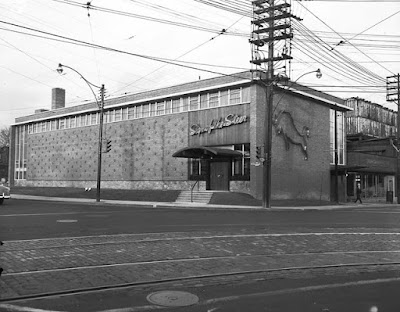
This installment of my "Ghost City" column for The Grid was originally published on January 22, 2013. Toronto Star , October 26, 1948. Until 1948, anyone headed to the southwest corner of Bloor Street and Concord Avenue typically went to peruse the area’s long succession of furniture businesses, looking for that perfect addition to their home décor. The granting of a liquor license that year to the Concord Tavern ushered in the intersection’s long association with music as a venue and instrument seller.
off the grid: ghost city 1195 danforth avenue

Image
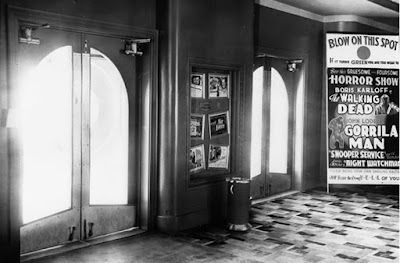
This installment of my "Ghost City" column for The Grid was originally published on October 23, 2012. Allenby Theatre lobby, 1936. Image courtesy Silent Toronto, which has more on the feature presentation depicted here . A suggestion for anyone hitting the town in their best Rocky Horror Picture Show finery this Halloween: Make a pit stop at the Esso/Tim Horton’s at Danforth and Greenwood . Walk through the restored front doors underneath the marquee of the old Allenby theatre. Buy some snacks to fuel an evening of time-warping. Take a look at the old ads in the showcase by the front doors and take a moment to pay tribute to the place where the movie became a Toronto cult favourite.

off the grid: ghost city balmy beach club

Image
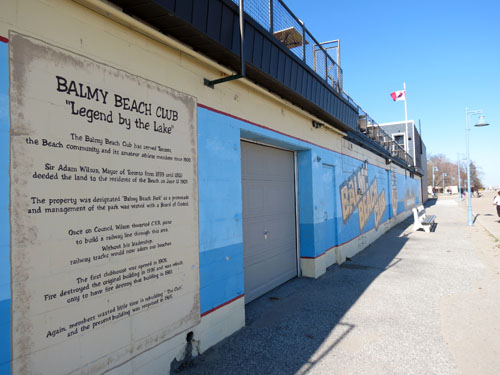
This installment of my "Ghost City" column for The Grid was originally published on April 23, 2013. Photo taken April 2013. When prominent jurist and one-time Mayor of Toronto Sir Adam Wilson partitioned his property along Lake Ontario in January 1876, he set aside a portion for use as a public “promenade and recreation grounds.” Within a few years, the community of Balmy Beach grew around Wilson’s lands, which sat amid the growing amusement parks and cottages that spurred the development of The Beach.

off the grid: ghost city 260 church street

Image
This installment of my "Ghost City" column for The Grid was originally published on September 25, 2012. 260 Church Street, May 7, 1913. City of Toronto Archives, Series 372, Subseries 1, Item 35. Click on image for larger version.  At street level, the Pizza Pizza at the southwest corner of Church and Dundas deviates little from other branches of the chain. Apart from reproductions of vintage French advertisements on the wall and lights dangling like teardrops from the ceiling, 260 Church Street bears the same orange colour scheme and the same special-touting window ads as other locations. But a glance at the upper two levels of its exterior reveals that past orders inside included bank deposits with a side of dipping into savings.

off the grid: ghost city rosedale park

Image
This installment of my "Ghost City" column for The Grid was originally published on November 20, 2012. An expanded version was published on Tales of Toronto . Rosedale Field clubhouse, November 30, 1921. City of Toronto Archives, Fonds 1231, Item 615. During World War II, Montreal-based Park Steamship Company named additions to its war cargo fleet after a few Canadian parks. Among those chosen were Hillcrest and Rosedale. Assigned to write historical plaques about each park, poet P.K. Page contacted Toronto civic officials for background information. Parks commissioner Charles E. Chambers provided Page with the info she required, but noted at the end of a March 27, 1944 letter that “neither park has any historical importance.”

off the grid: ghost city 20 st. joseph street

Image
This installment of my "Ghost City" column for The Grid was originally published on November 6, 2012. Creating more space within a heritage building can be tricky, especially if plans outlining previous changes are unavailable. When the Canadian Music Centre wanted to open up its main floor for a performance space and lounge, architects worked around obstacles like central-air ducts installed over the course of the former Victorian home’s history.

off the grid: retro t.o. cbc's black wednesday (and the impact in windsor)

Image
This installment of my "Retro T.O." column for The Grid was originally published on April 10, 2012. Cartoon by Patrick Corrigan, Toronto Star , December 7, 1990. It was an evening that should have been joyous for Canadian television. But as the Gemini Awards ceremony ended on December 4, 1990, the audience learned of an ominous announcement on that night’s edition of The National . The hosts of Monitor —the Gemini-nominated investigative-news series that aired on Toronto’s CBC affiliate, CBLT—stood arm-in-arm as they watched a story indicating that CBC would slash $110 million from its budget by closing 10 regional TV stations and cutting 1,200 employees. It was believed that Monitor was among the shows that would get the axe, an event for which co-host Jeffrey Kofman seemed prepared. “Toronto is already well served by the media,” he told the Star . “I’ve had five great years. I’ll survive.” The punctured mood was summed up by Peter Mansbridge, who found it difficult to...

off the grid: the choosing of an interim toronto mayor, 1978

This post has been moved over to my Tales of Toronto website .

off the grid: ghost city 1172 dundas street west

Image
This installment of my "Ghost City" column for The Grid was originally published on May 2, 2013. Dempster's Staff of Life Bakery is visible in the background of this streetcar track construction shot taken along Dundas Street on July 19, 1917. City of Toronto Archives, Fonds 200, Series 372, Subseries 58, Item 681. During the last decades of the 19th century, the Toronto bread market was a battleground. Bakers faced resistance from housewives used to making their own loaves and tough battles for customers with an increasing supply of commercial competitors. When teenager George Weston entered the business in the early 1880s, the future food mogul joined nearly 60 other city bakers and nearly 60 more confectioneries.

off the grid: ghost city 10 scrivener square

Image
This installment of my "Ghost City" column for  The Grid  was originally published on   May 14, 2013. Last week, an onsite time capsule was opened . Globe , September 10, 1915. The Canadian Pacific Railway was tired of arguing. Negotiations with government bodies over the development of a replacement for the existing Union Station were heading nowhere fast. Fatigued by squabbling, in 1912, the CPR moved several passenger routes from downtown to a line it controlled in the north end of the city. While a train station already existed on the west side of Yonge Street near Summerhill Avenue, it hardly matched CPR executives’ visions of grandeur.

off the grid: ghost city 696 yonge street

Image
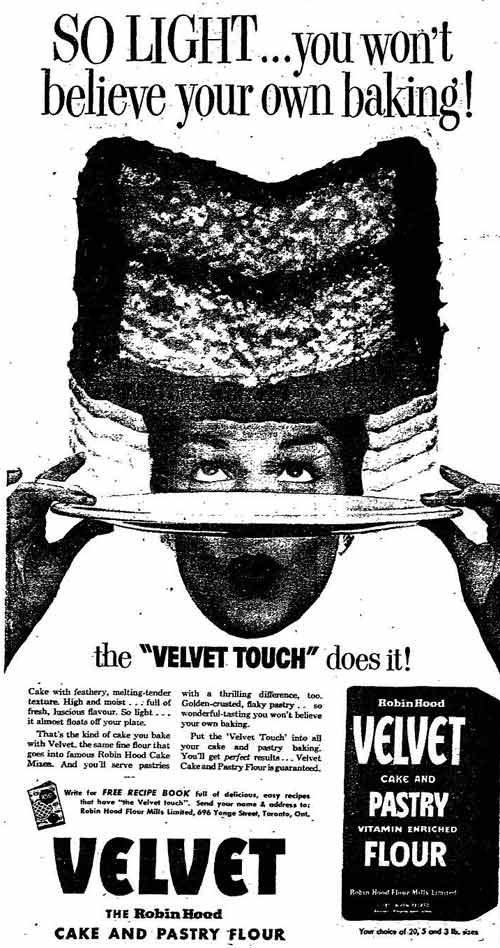
This installment of my "Ghost City" column for The Grid was originally published on January 29, 2013. The building is still boarded up as of this reprint. Toronto Star , September 12, 1957. The Church of Scientology’s Toronto headquarters are in the midst of an “Ideal Org” makeover—signalled, last month, by boards nailed to the Yonge Street high-rise. While it remains to be seen whether the move will fracture the controversial faith’s local followers as similar, costly refurbishings have in other cities, the plans are less than modest, indicating a colourful new façade will be placed on the almost-60-year-old office building, along with a new bookstore, café, theatre, and “testing centre” inside. Built around 1955 in the International style of architecture, 696 Yonge’s initial tenant roster included recognizable brands like Avon cosmetics and Robin Hood flour. They were joined by an array of accounting firms, coal and mining companies, and the Belgian consulate, alon...

off the grid: ghost city 672 dupont street

Image
This installment of my "Ghost City" column for The Grid was originally published on April 1, 2013. Toronto Star , February 25, 1915. Employees of the Ford Motor Company likely smiled as 1915 dawned. During a January banquet at the automaker’s recently opened plant at the northwest corner of Dupont and Christie, employees learned they were receiving an across-the-board raise and would soon be joined by a fresh batch of co-workers. There aren’t any reports, however, as to whether workers celebrated by taking extra spins in freshly-built Model Ts on the rooftop test track.

off the grid: retro t.o. the golden age of swarming

Image
This installment of my "Retro T.O." column for The Grid was originally published on April 24, 2012. Globe and Mail , May 27, 1989. Depending on the city, the practice had different names—“bum rushing” in New York, “trashing” in Los Angeles, “steaming” in London. As the 1980s came to a close, the media in Toronto reported that a growing number of local youths participated in “swarming” attacks on individuals and businesses to steal jackets, jewellery, money, shoes, and, in the case of the Yonge and Eglinton branch of Fran’s, pastry. These incidents heightened fears about increased gang activity and how to handle restless, disaffected youth throughout all socio-economic levels in the city.

off the grid: ghost city 1115 queen street west

Image
This installment of my "Ghost City" column for The Grid was originally published on November 27, 2012. Queen-Lisgar library branch, 1909. Toronto Public Library. When the Theatre Centre launches its new space in the old Queen-Lisgar library next year, it’s unlikely there will be as many disappointed faces as have witnessed past grand openings at 1115 Queen Street West. The building’s origins date back to 1903, when philanthropist Andrew Carnegie granted $350,000 to the city to build a new central library and three neighbourhood branches. The grant allowed the Toronto Public Library to own sites rather than rent existing buildings. In the case of Queen-Lisgar, it replaced a 20-year-old branch rented on Ossington Avenue that had inherited the collection of an earlier Parkdale library. The new building was designed in a Beaux-Arts style by City Architect Robert McCallum, whose other surviving projects include the palm house in Allan Gardens. During its official opening...

off the grid: ghost city 568 bloor street west

Image
This installment of my "Ghost City" column for The Grid was originally published on March 5, 2013. Alhambra theatre, September 1960. City of Toronto Archives, Series 372, Subseries 100, Item 263.  When was the last time you were handed a ceremonial program at the opening of a new mainstream movie theatre? Attendees at the debut of the Alhambra on November 17, 1919 received a 14-page booklet extolling the virtues of the new theatre, along with a glimpse at upcoming attractions. The owners hoped that patrons would enjoy “the first of many pleasant evenings of relaxation to be spent in this perfectly appointed Temple of Silent Art.”

off the grid: 146 dupont street

Image
This installment of my "Ghost City" column for The Grid was originally published on December 4, 2012. A longer story about Hans Fread later appeared  as a Historicist column for Torontoist .  Sign of the Steer restaurant, northeast corner of Davenport and Dupont, 1955. City of Toronto Archives, Fonds 1257, Series 1057, Item 504. Click on image for larger version. Food and furnishings. These have been the staples for the revolving door of occupants at the northeast corner of Davenport Road and Dupont Street for over half-a-century. Back at the turn of the 1960s, this high-turnover site brought such ruin to original owner Hans Fread, Canada’s first star chef, that 146 Dupont was known for years as “Hans Fread’s Folly.” However, for this notoriously outspoken restaurateur, most of his follies were self-inflicted; as he once admitted, “I am sometimes like a little boy with a big mouth—when I am angry, I talk too much and it comes back to hurt me.” Originally a lawyer in ...

off the grid: retro t.o. late nights at people's foods

Image
This installment of my "Retro T.O." column for The Grid was originally published on June 5, 2012. As of August 2015, the site is occupied by Rose and Sons restaurant. Toronto Star , October 18, 1987. Click on image for larger version. Patrons intending to dine at People’s Foods on Dupont Street were greeted last week with a notice on the door stating that the half-century old diner was closing due to its lease expiring. Though one report suggests that the owners hope to find a new location, for now, regulars will have to look elsewhere for greasy-spoon staples and jukebox selectors at their booths. A quarter of a century ago, People’s was among the “denziens of the dark hours” that the Toronto Star spotlighted in an article on life in the city between midnight and dawn. A 24-hour eatery at the time, People’s saw an early-morning procession of shift workers, police, and frat boys grazing on homemade burgers and onion rings. “The dazzling fluorescent lights are alw...

off the grid: retro t.o. caribana turns 20

Image
This installment of my "Retro T.O." column for The Grid was originally published on July 31, 2012. Toronto Star , July 31, 1987.  “Caribana has become an important staple in the cultural diet of this city. And we feel encouraged that it has now been accepted in the mainstream.” Those words from festival coordinator LeRoi Cox reflected the confidence organizers felt as Caribana (the predecessor to the current Scotiabank Caribbean Carnival) celebrated its 20th anniversary in 1987. Rather than headlines reflecting fears of violence and criminal activity, coverage during that landmark year highlighted how to enjoy it.

off the grid: retro t.o. waitin' for the spadina streetcar

Image
This installment of my "Retro T.O." column for The Grid was originally published on June 19, 2012. Globe and Mail , July 26, 1997. Click on image for larger version. Lovers of wild pants and saxophones rejoice! As of this week, the Spadina bus of 1980s musical fame has returned while platform reconstruction takes the streetcar right-of-way out of service for several months. And the return of bus service might reawaken arguments that stalled the construction of the Spadina streetcar line for years.

off the grid: ghost city cumberland terrace

Image
This installment of my "Ghost City" column for The Grid was originally published on January 15, 2013. Toronto Life , December 1985. That Cumberland Terrace exists as a time capsule of shopping-mall design fits well with one of the site’s earliest uses: A cemetery preserving the memory of loved ones. Currently honoured with a plaque on the 2 Bloor West tower, Potter’s Field was Toronto’s first non-denominational burial ground when it opened in July 1826.