Posts

Showing posts with the label ghost city

off the grid: ghost city 660 broadview avenue (william peyton hubbard)

Image
This installment of my "Ghost City" column for The Grid was originally published on February 12, 2013. Portrait of William Peyton Hubbard, 1913, by W.A. Sherwood. When William Peyton Hubbard was born in 1842 it’s doubtful his father, a freed slave who had arrived in Toronto two years earlier, imagined that the infant would become one of the city’s most powerful politicians. The road to that accomplishment took time: Before Hubbard entered politics in 1893, he baked cakes and drove a horse cab, occupations that were the norm for the city’s small black population.

off the grid: ghost city 925 bloor street west

Image
This installment of my "Ghost City" column for The Grid was originally published on January 22, 2013. Toronto Star , October 26, 1948. Until 1948, anyone headed to the southwest corner of Bloor Street and Concord Avenue typically went to peruse the area’s long succession of furniture businesses, looking for that perfect addition to their home décor. The granting of a liquor license that year to the Concord Tavern ushered in the intersection’s long association with music as a venue and instrument seller.

off the grid: ghost city 1195 danforth avenue

Image
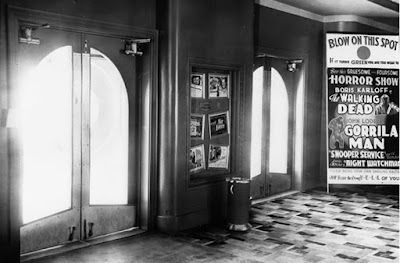
This installment of my "Ghost City" column for The Grid was originally published on October 23, 2012. Allenby Theatre lobby, 1936. Image courtesy Silent Toronto, which has more on the feature presentation depicted here . A suggestion for anyone hitting the town in their best Rocky Horror Picture Show finery this Halloween: Make a pit stop at the Esso/Tim Horton’s at Danforth and Greenwood . Walk through the restored front doors underneath the marquee of the old Allenby theatre. Buy some snacks to fuel an evening of time-warping. Take a look at the old ads in the showcase by the front doors and take a moment to pay tribute to the place where the movie became a Toronto cult favourite.

off the grid: ghost city balmy beach club

Image
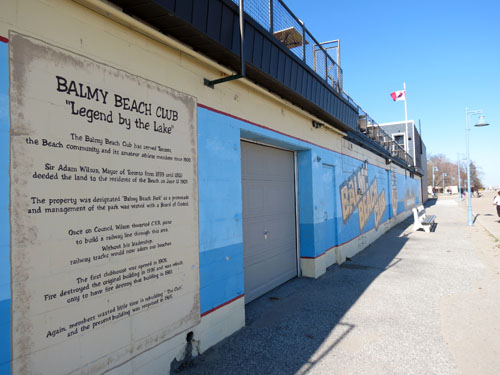
This installment of my "Ghost City" column for The Grid was originally published on April 23, 2013. Photo taken April 2013. When prominent jurist and one-time Mayor of Toronto Sir Adam Wilson partitioned his property along Lake Ontario in January 1876, he set aside a portion for use as a public “promenade and recreation grounds.” Within a few years, the community of Balmy Beach grew around Wilson’s lands, which sat amid the growing amusement parks and cottages that spurred the development of The Beach.

off the grid: ghost city 260 church street

Image
This installment of my "Ghost City" column for The Grid was originally published on September 25, 2012. 260 Church Street, May 7, 1913. City of Toronto Archives, Series 372, Subseries 1, Item 35. Click on image for larger version.  At street level, the Pizza Pizza at the southwest corner of Church and Dundas deviates little from other branches of the chain. Apart from reproductions of vintage French advertisements on the wall and lights dangling like teardrops from the ceiling, 260 Church Street bears the same orange colour scheme and the same special-touting window ads as other locations. But a glance at the upper two levels of its exterior reveals that past orders inside included bank deposits with a side of dipping into savings.

off the grid: ghost city 20 st. joseph street

Image
This installment of my "Ghost City" column for The Grid was originally published on November 6, 2012. Creating more space within a heritage building can be tricky, especially if plans outlining previous changes are unavailable. When the Canadian Music Centre wanted to open up its main floor for a performance space and lounge, architects worked around obstacles like central-air ducts installed over the course of the former Victorian home’s history.

off the grid: ghost city 10 scrivener square

Image
This installment of my "Ghost City" column for  The Grid  was originally published on   May 14, 2013. Last week, an onsite time capsule was opened . Globe , September 10, 1915. The Canadian Pacific Railway was tired of arguing. Negotiations with government bodies over the development of a replacement for the existing Union Station were heading nowhere fast. Fatigued by squabbling, in 1912, the CPR moved several passenger routes from downtown to a line it controlled in the north end of the city. While a train station already existed on the west side of Yonge Street near Summerhill Avenue, it hardly matched CPR executives’ visions of grandeur.

off the grid: ghost city 696 yonge street

Image
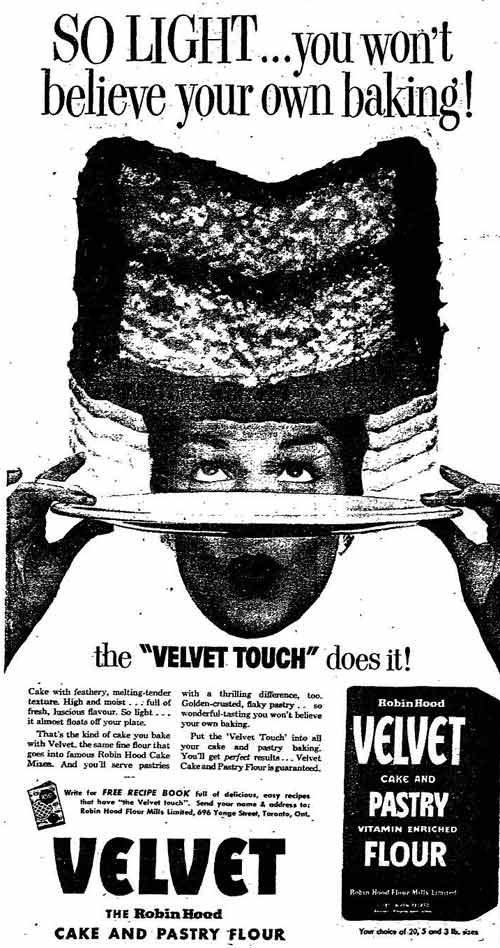
This installment of my "Ghost City" column for The Grid was originally published on January 29, 2013. The building is still boarded up as of this reprint. Toronto Star , September 12, 1957. The Church of Scientology’s Toronto headquarters are in the midst of an “Ideal Org” makeover—signalled, last month, by boards nailed to the Yonge Street high-rise. While it remains to be seen whether the move will fracture the controversial faith’s local followers as similar, costly refurbishings have in other cities, the plans are less than modest, indicating a colourful new façade will be placed on the almost-60-year-old office building, along with a new bookstore, café, theatre, and “testing centre” inside. Built around 1955 in the International style of architecture, 696 Yonge’s initial tenant roster included recognizable brands like Avon cosmetics and Robin Hood flour. They were joined by an array of accounting firms, coal and mining companies, and the Belgian consulate, alon...

off the grid: ghost city the bayview ghost

Image
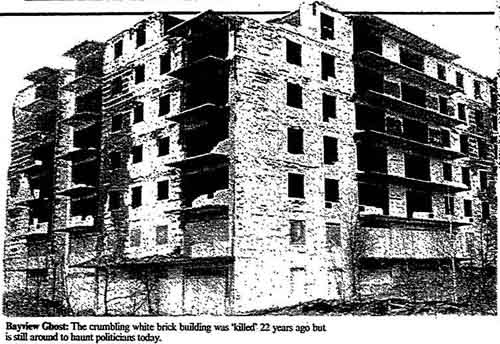
This installment of my "Ghost City" column for The Grid was originally published on January 8, 2013. Toronto Star , March 22, 1981. When East York rejected physician Charles Trow’s offer to sell his 25-acre wooded property south of Leaside to the municipality for use as parkland circa 1950, little did political officials realize the headaches that would ensue over the next half-century. Instead, the property—which offered a beautiful view of the Don Valley—was sold by Trow’s widow in 1953 to developers Hampton Park Company Ltd. Legal problems arose almost immediately as Hampton Park proprietors Harry Freedman and Harry Frimerman beat a foreclosure attempt when they were slow to pay the mortgage. The site was approved for apartment development in East York’s first official plan in 1957, but the document was scrapped when the township planner was fired for consulting with tower builders on the side.